

Unveiling Scotland’s Royal Secrets: Hidden Pyramids in the Heart of Balmoral
Nestled deep within the enchanting woodlands of Balmoral Estate — the beloved Highland retreat of Queen Victoria — lies a royal mystery waiting to be explored: a collection of 11 little-known memorial cairns, including a striking granite pyramid often dubbed “Scotland’s Great Pyramid.” These hidden royal monuments are steeped in history, emotion, and symbolism, quietly chronicling the British monarchy’s connection to Scotland’s dramatic landscapes.
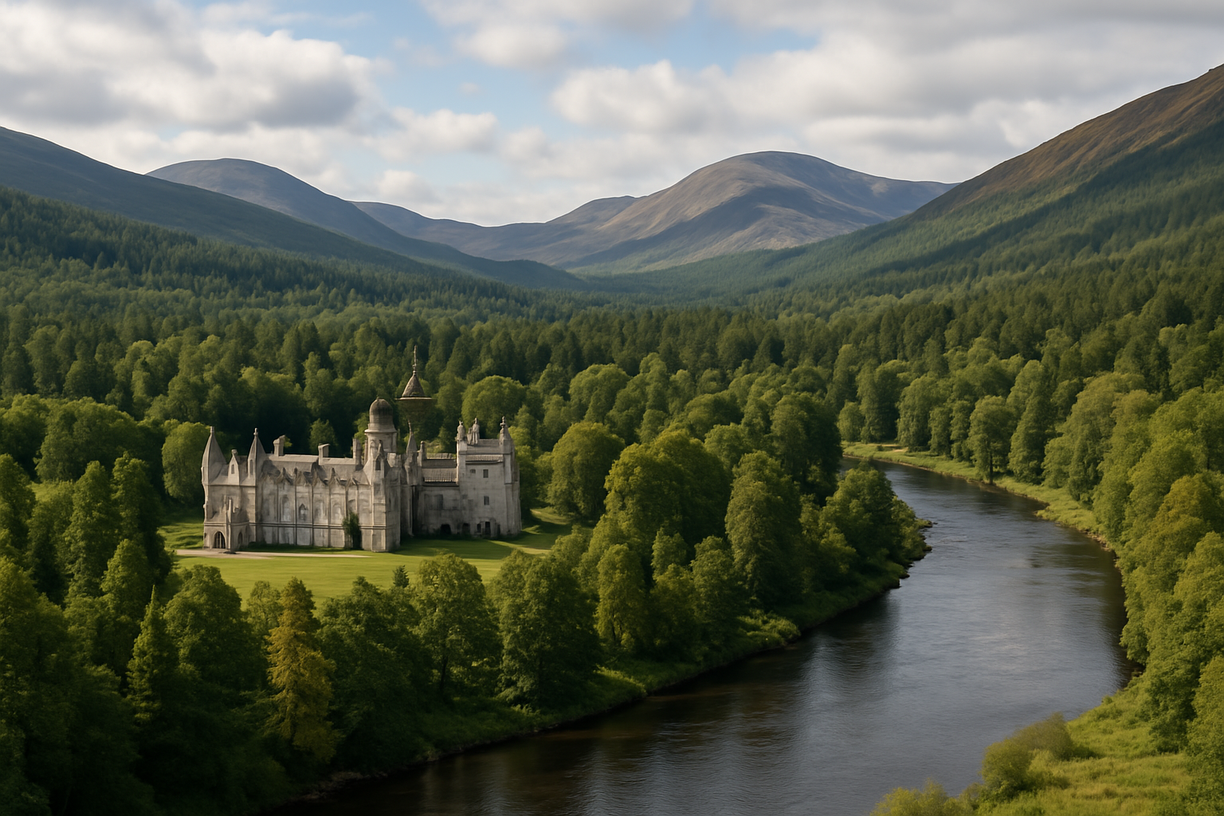
Located in Aberdeenshire’s scenic Royal Deeside, Balmoral Castle has served as a royal sanctuary since 1848. When Queen Victoria first visited the castle that year, she was captivated by the tranquility of the Scottish Highlands. Writing in her journal, she noted how the region’s solitude offered a peaceful escape from the world’s chaos — a feeling that transformed Balmoral into her lifelong haven.
A Secret Landscape of Royal Memory
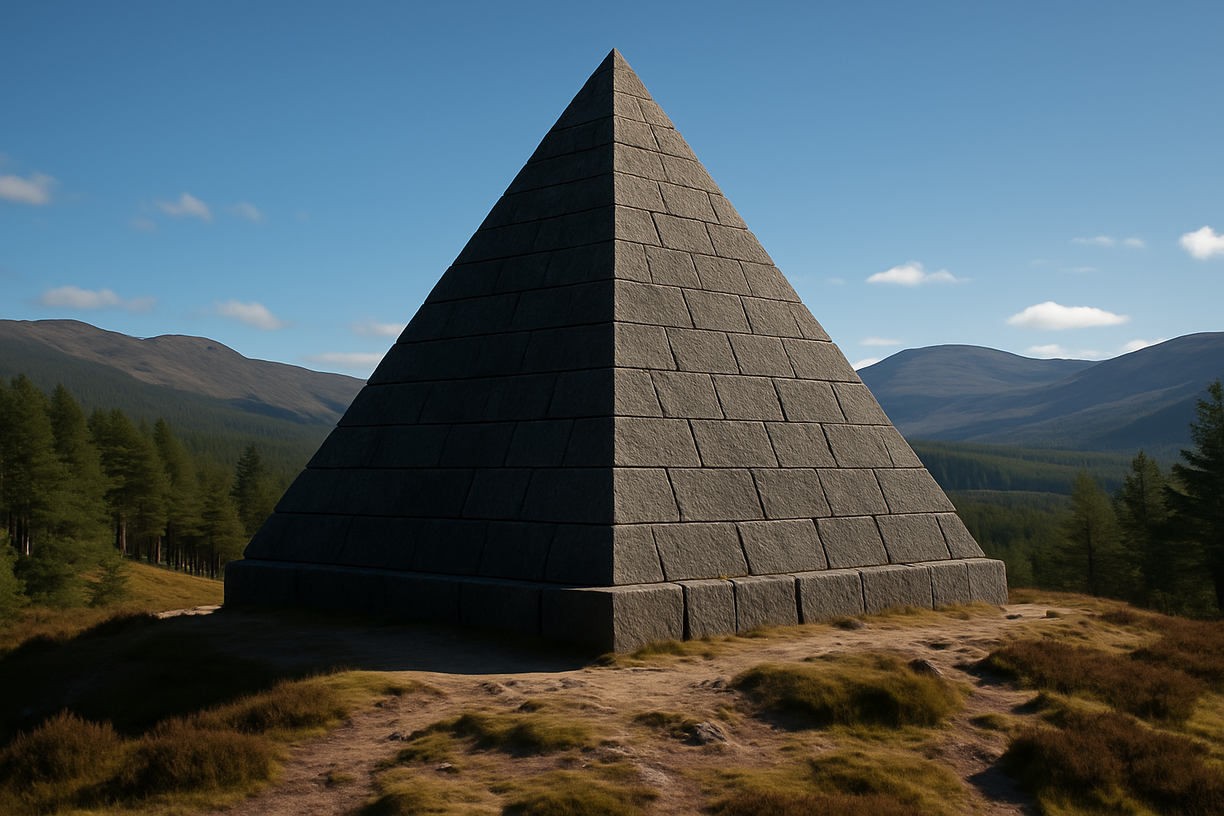
Beyond the castle’s stately grandeur — including 167 rooms, a sunken garden, a ballroom, and a thistle-shaped maze — lies a mystical network of cairns scattered across the estate’s nearly 50,000 acres. The largest and most iconic cairn, built in memory of Prince Albert after his death in 1861, is an 11-meter-high pyramid perched atop Craig an Lurachain hill, commanding sweeping views of Cairngorms National Park.
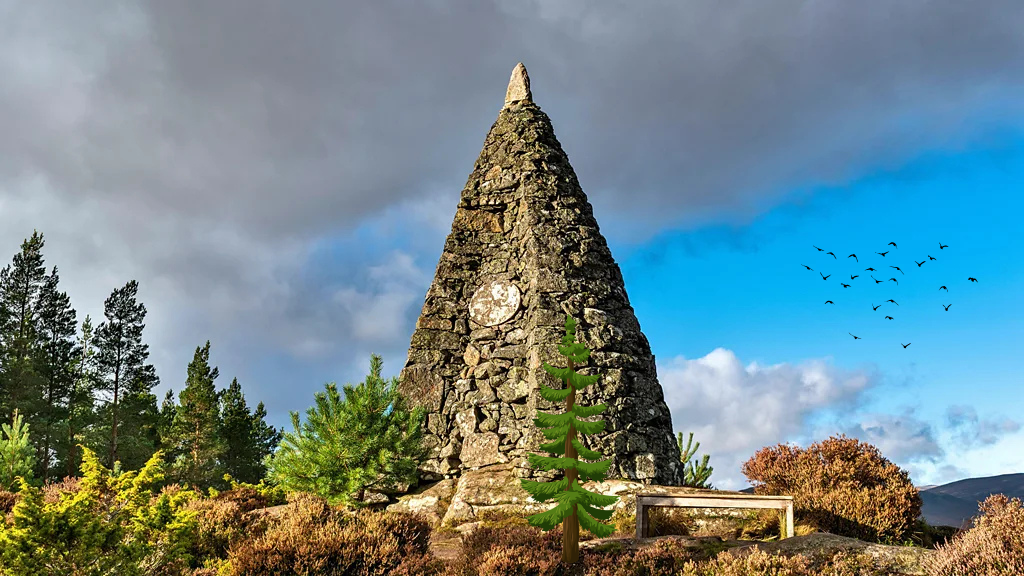
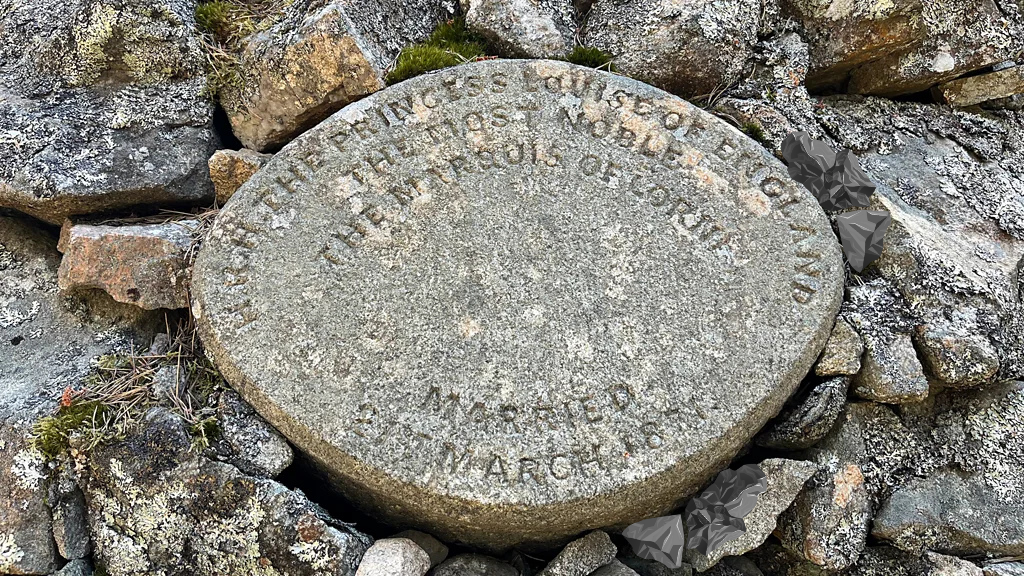
These cairns are more than stone markers. They narrate stories of royal marriages, grief, and political symbolism. Queen Victoria personally commissioned most of them to commemorate her nine children’s unions — including Princess Louise, whose cairn reflects her marriage to John Campbell, the 9th Duke of Argyll, thereby reinforcing the royal family’s ties to the Highlands.
A Hike into the Past
Venturing into the forest from the Balmoral car park in Crathie, visitors embark on an ethereal trek through pine-covered trails and glens echoing with birdsong. Along the path, you’ll encounter Princess Helena’s cairn, then Princess Louise’s, perched high on a crag. The Purchase Cairn, built in 1852 to mark the royal acquisition of Balmoral from Clan Farquharson, offers panoramic views from Craig Gowan and serves as a symbolic gateway to this hidden memorial trail.
Each cairn stands as a unique stone chapter in the saga of the British royal family’s Highland legacy. And they almost never existed here. Historical records show Queen Victoria and Prince Albert considered acquiring Ardverikie Estate near Loch Laggan — but Balmoral’s relative remoteness and natural beauty won them over.
Victorian Romanticism and the Scottish Imagination
According to Professor Ewen Cameron, an expert in Scottish history, the cairns symbolize Queen Victoria’s romanticized vision of Scotland — a vision that helped shape modern perceptions of the Highlands. He refers to this idealization as the “Balmoralisation” of Scotland, a phenomenon heavily influenced by Victorian art and literature, especially Sir Walter Scott and Edward Landseer’s famous painting The Monarch of the Glen.
Landseer’s artwork — now housed at the National Galleries of Scotland — encapsulates this idealized wilderness: noble stags, misty hills, and untouched nature. It’s a version of Scotland that persists in popular culture and still draws thousands of visitors annually to Balmoral and beyond.
A Modern Pilgrimage in the Highlands
Today, the cairns offer a rare blend of historical exploration, nature, and solitude. The trail to the Prince Albert pyramid — the most remote and breathtaking of the monuments — ends with a view that feels like stepping into a romantic painting. Whether you’re a history buff, royal watcher, or Highland hiker, these hidden royal memorials provide a deeply rewarding journey through both the physical and emotional landscapes of Victorian Scotland.
New Insight: A Royal Legacy Under Climate Threat
Recent environmental studies by the Scottish Environment Protection Agency (SEPA) warn that the Cairngorms and nearby Deeside landscapes face increasing risks from climate change, including more intense rainfall and erosion. These factors could threaten the structural integrity of lesser-known cairns and trails. Conservation groups, including the National Trust for Scotland, are now advocating for protective measures to ensure these historical markers endure for future generations.
Balmoral Castle is open to the public from April to early August, but the cairn trails can be accessed most of the year. Bring sturdy hiking boots, and prepare for a 5–6 mile woodland trek. Maps are available at the visitor center, though many cairns are unmarked — adding to the allure of discovery.
Discover More:
If you’re fascinated by Scotland’s untold stories, don’t miss these:
-
🔍 [The Ancient Symbols Hidden in Scottish Stone Circles]
-
💎 [Scotland’s Endangered Freshwater Pearls]
-
🌿 [A Carbon-Neutral Wilderness in the Highlands]
 Русский
 English
 العربية
 Italiano
 Deutsch
 Français